
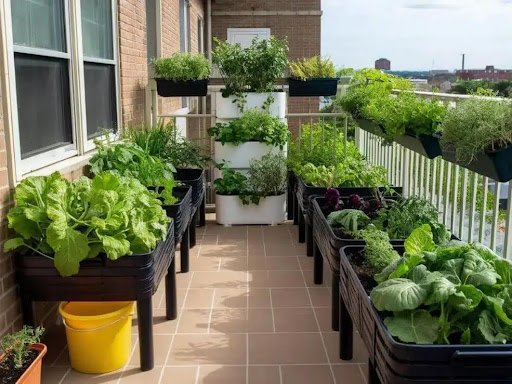
Some individuals assume that gardening must be done in the backyard, yet it does not mean that urban living excludes the possibility of fresh food production. The small-space gardening lets any person with a balcony, rooftop or sunny window grow herbs and vegetables. It enhances sustainability, food awareness, and contributes to well-being besides the introduction of greenery.
Urban agriculture programs that are sponsored by the U.S. Department of Agriculture (USDA) have been encouraging households to utilize local soil to cultivate food to enhance food security and minimize transportation emissions.
A handful of pots of herbs can make a difference between depending on the packaged foods and minimizing the costs of grocery.
Begin with Simple Containers.
One of the simplest methods of starting is container gardening. Small pots are good in growing plants like basil, mint, coriander, lettuce, spinach and chilies. Vertical gardening systems are designed to utilize the small available space by applying the walls or railings rather than floor. Tin and buckets or even wooden crates could be used as a creative way to use your tins, buckets or wooden crates to plant and save money.
Focus on Sunlight and Soil
The majority of consumable plants need 4-6 hours of light per day. Healthy growth of pots is possible when they are placed close to windows or on balconies. It is also important to thoroughly water and to use nutrient-rich soil. Natural fertilizer can be kitchen compost produced using vegetable scraps and hence eliminating the use of chemicals.
According to the Food and Agriculture Organization (FAO), urban agriculture enhances resilience in times of food shortages and it is more effective in enhancing nutrition.
Environmental and Personal Benefits.
Local food production minimizes the amount of packaging and the carbon dioxide emitted in shipping. It also forms conscious consumption. Whenever people cultivate at least some of their food, they become more familiar with the concept of seasonality and minimize the amount of food waste.
In addition to environmental value, gardening helps the mental health. Planting helps to promote routine, patience and stress relief – something that is noteworthy in high population areas. The process of planting seeds into food subsequently reminds people of the processes of nature and gives them a feel of that in the city.
It takes no immaculate circumstances to start off, you need just the interest and patience. One pot on a window sill in the sun could be the start of living more sustainably and living a more independent life.