
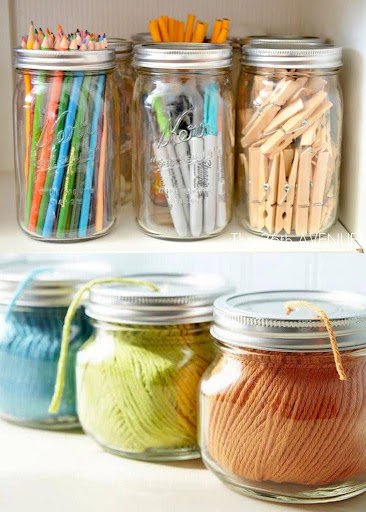
Majority of the waste at the household level is not actually useless but just wasted. Creative reuse converts ordinary items into either utilitarian or ornamental products, which minimizes wastage at landfill and promotes creativity. Reuse poses a question: Can this be used again? It is such a simple question, yet in such a strong form that once it is asked, you really do not need to respond to the rest of the questions.
The U.S. Environmental Protection Agency (EPA) says that one of the best waste-reduction approaches is reuse since it avoids disposal and mitigates the environmental impact on creation of new products.
Each reused product conserves energy, raw materials, water and emissions of transportation.
Creative reuse starts at home. Glass jars may be repurposed into meal prep containers, herb storage, plant pots, herb planters. lanterns, snow globes, or pencil, pen or paint brush holders. Cardboard boxes may be reused in the form of drawer boxes or file boxes. Old garments can be reused as cleaning rags, cushions or reusable shopping bags. Even tin cans can be used as pens holders or plants pots.
Zero Waste International Alliance encourages reuse as one of the practices in saving natural resources and helping to be responsible consumers.
Every day by keeping the lifespan of common objects longer, households lessen the necessity of buying new products and reduce the amount of waste in its sources.
The Reason Why Reuse is better than Recycling.
Importantly, recycling needs to be processed with industries, transport, and energy. Reuse does not go through these phases at all. Reuse prevents the degradation of products to form a new one as in the case of material reuse. This saves on the impact on the environment and household expenditure.
Mindful consumption is also promoted by creative reuse. When individuals start perceiving items as versatile resources and not as things that should be discarded, the buying behavior shifts. People begin to give preference to long-term products that can be used.
Minor efforts bring significant outcomes. So, the next time you want to discard something, stop and think and ask yourself – is it fixable, can it be re-purposed or re-used?
Incorporating these mindful changes will help to develop sustainable practices, minimize waste, and result in environmental responsibility that all began with imagination at home.